Advanced settings: API, webhooks, jobs, privacy and audit
Manage API keys, webhook deliveries, jobs and retention rules.
Web and desktop: Settings → Advanced. Authorized managers use these for external access, background operations and retention. Machine recovery/MCP/screen options are under desktop settings.
Before you start
Management access is required; being queued does not mean the operation completed.
API keys — /settings/api-keys
New API key sets name, scopes and optional expiry. Empty scopes use what the creator can access. The browser generates the key and shows it once; only its digest goes to the server. Later rows show name, prefix, status, last use and creator. Rename or Revoke; access ends immediately while the row remains for attribution. These differ from AI BYOK keys. Do not assume every API route accepts them; see API guide.
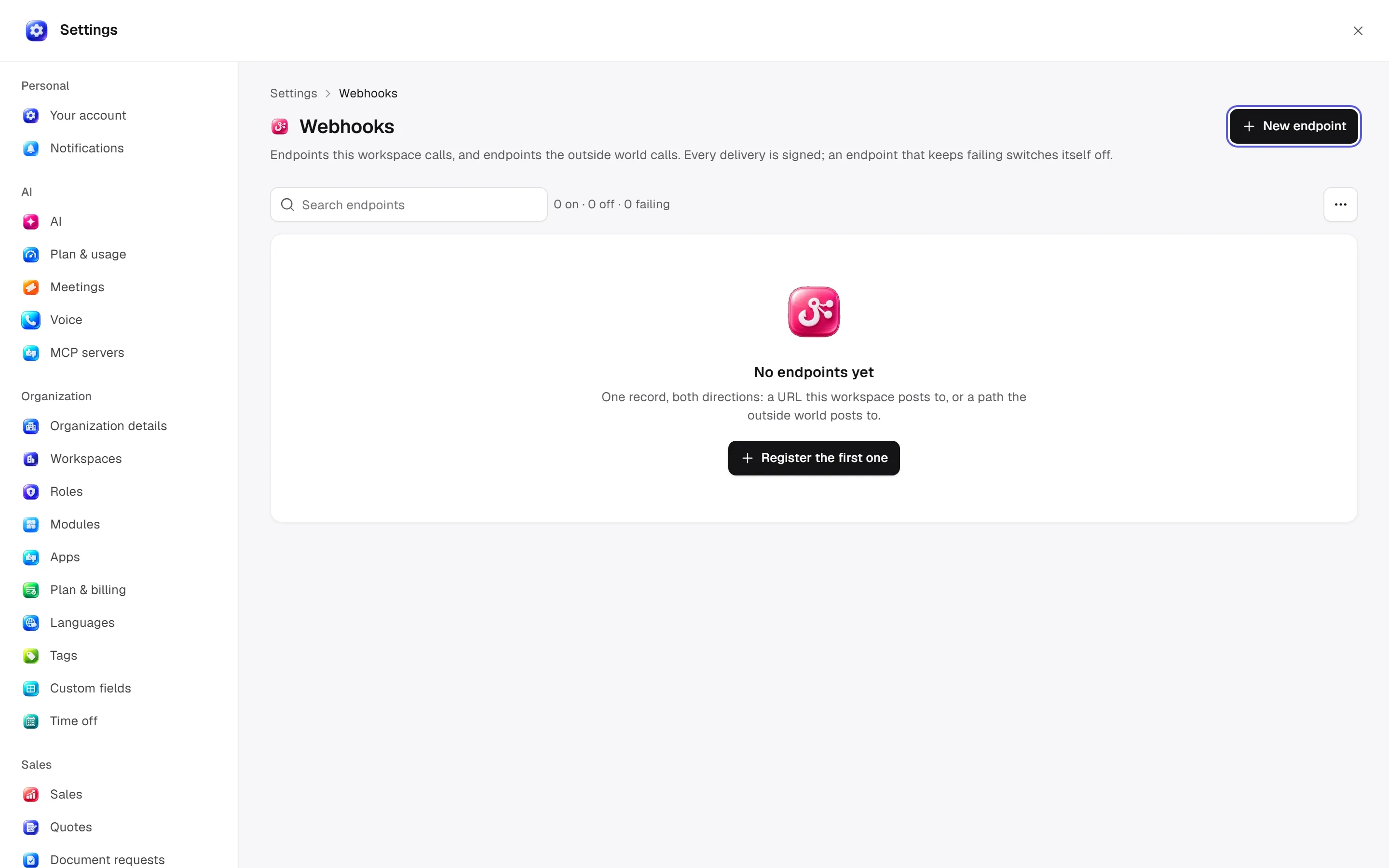
Webhooks — /settings/webhooks
New endpoint chooses direction/name. Outbound uses URL/events; empty events means all. Details include On/Off, URL, events, timeout (1,000–30,000 ms), attempts (1–10), Send test, key rotation and history. Consecutive failure thresholds disable endpoints; fix the receiver and re-enable to reset failures.
Inbound shows copyable address, once-shown token, per-caller requests/minute (0–6,000), last body and receipt time. History loads the latest 300 attempts across endpoints. Replay resends the same body; inspect consent/idempotency behavior. Sweep history removes old attempts/expired idempotency entries, default 30 days. Delete endpoint also removes its recorded attempts.
Jobs — /settings/jobs
Queued, running and failed background work. Details: Progress / Timeline / Errors / Payload / Output. Secret-looking payload keys are hidden. Queued jobs can be cancelled; this cancellation gate does not stop running jobs. Run housekeeping performs daily sweeps now. Do not multiply a failed job before fixing its cause.
Privacy — /settings/privacy
GDPR/KVKK request register: pending approvals, exports and completed erasures. Options: Export retention days and Require second approver. Apply retention now removes expired export files while keeping register rows. Erasure scrubs names/contact/identities/addresses; invoices/orders remain as commercial records without personal details. It is irreversible; check the subject before approval.
Audit — /settings/activity, records /activity
Retention days: 0 keeps everything; otherwise at least 30. Apply now purges old entries. Seal audit trail enables daily integrity chaining; Seal now applies it. Verify on Activity checks the chain. Platform-recorded actor, changes, correlation/job and redacted secrets are not configurable here.
External MCP — AI group, /settings/integrations/mcp
Add MCP server: name, Streamable HTTP URL and optional header JSON such as authorization. Test & add verifies the connection and discovers tools. Rows show status/tool count and support refresh, enable/disable and removal. Explicitly enable it in the agent's Apps & tools; adding it does not grant all agents access. Secrets are not shown back in full. External servers do not widen Era role access.
Permissions and examples
Platform, privacy, activity or AI management access is required by page; read access does not authorize changes. Incoming webhooks emit platform.webhook_received, which workflows can listen to. Ask Era “Why was this webhook disabled?” or “Explain the last failed background job and suggest a fix before rerunning.” See technical integration rules.